

Update, September 29, 2026. September 29: the juror-inquiry motion was continued to November 2. Judge Sullivan asked the juror’s counsel to clarify in writing what impounded material she seeks. Hearing report.
Update, September 25, 2026. The juror’s lawyer now says his client will file a bar complaint against Reddington. What that process looks like, and which conduct rules it would have to invoke, is in our explainer.
Update, September 23, 2026. The September 29 hearing is now set for 9 a.m. in Plymouth Superior Court, with three motions pending. Our preview explains why the renewed Rule 25 motion for a required finding of not guilty, rather than this juror motion, is the one that could end the case, and why the Commonwealth’s appeal right under Rule 25(c)(1) does not by its terms reach an acquittal entered after a hung jury.
Update, September 22, 2026. The holdout juror’s lawyer, Edward Andrew Paltzik, answered the motion on September 22 in a written statement to WCVB rather than in court, calling it “a full-frontal attack on the U.S. Constitution” and predicting it would “backfire spectacularly.” The Sixth Amendment he invokes runs to the accused, not to a juror. We take apart the statement, and explain what actually protects a juror, in our analysis of the response.
Kevin Reddington filed two motions in Plymouth Superior Court on Monday, and together they turn the Lindsay Clancy case into something it has not been until now: a case about the juror. The first asks Judge William Sullivan to preserve records and conduct what the filing calls a “limited inquiry into Juror Doe,” the lone holdout who blocked a verdict of not criminally responsible. The second, filed with double-jeopardy specialist Martin Weinberg, argues that a retrial is barred because the court did not conduct that inquiry before declaring a mistrial. Both will be heard September 29.
Reddington wants the juror’s confidential questionnaire reviewed, his phone records obtained to see whether he used his cellphone during deliberations, and the juror himself questioned under oath. The memorandum and exhibits supporting the request have been impounded, so the public has the motion’s headings and Reddington’s description, not its evidence. This piece explains what the motion is built on, the two legal standards it has to meet, why the impoundment order that protects the juror’s name now cuts against the defense, and what the double-jeopardy theory actually is, because it is not the one argued for Karen Read.

What the motion asks for
Three things, according to NBC10 Boston, which obtained the docket entries and reported on the filing: a review of the juror’s completed questionnaire, a request for his phone records covering the deliberation period, and an order that he answer questions under oath. The filing refers to him throughout as “Juror Doe,” in deference to the court’s indefinite impoundment of juror identities, even though his own lawyer named him publicly on Friday.
Reddington did not argue the motion to reporters. “People can vilify me all they want and say that I’m making statements about the juror,” he said Monday. “I’m not making statements about the juror. I’m talking about the system.” Asked about the juror’s statement that he “didn’t have any doubts,” Reddington said: “We take care of that in the courtroom.”
What it is built on
An NBC10 Boston investigation, published after the mistrial, reported two matters in the juror’s past. In 2021 his then 13-year-old nephew called 911 and reported that the juror had grabbed his wife by the throat and thrown her into a dresser; the couple later divorced and the criminal charge was dismissed. Last year the same nephew, by then a teenager, obtained a restraining order after alleging the juror pushed him to the ground and punched him repeatedly, writing in his affidavit that his uncle told him “You ruined my life” for calling the police. The juror was found not guilty of the criminal charges from that incident, which sealed those records. The restraining order, however, was still active when he was seated on the Clancy jury in July and did not expire until August.
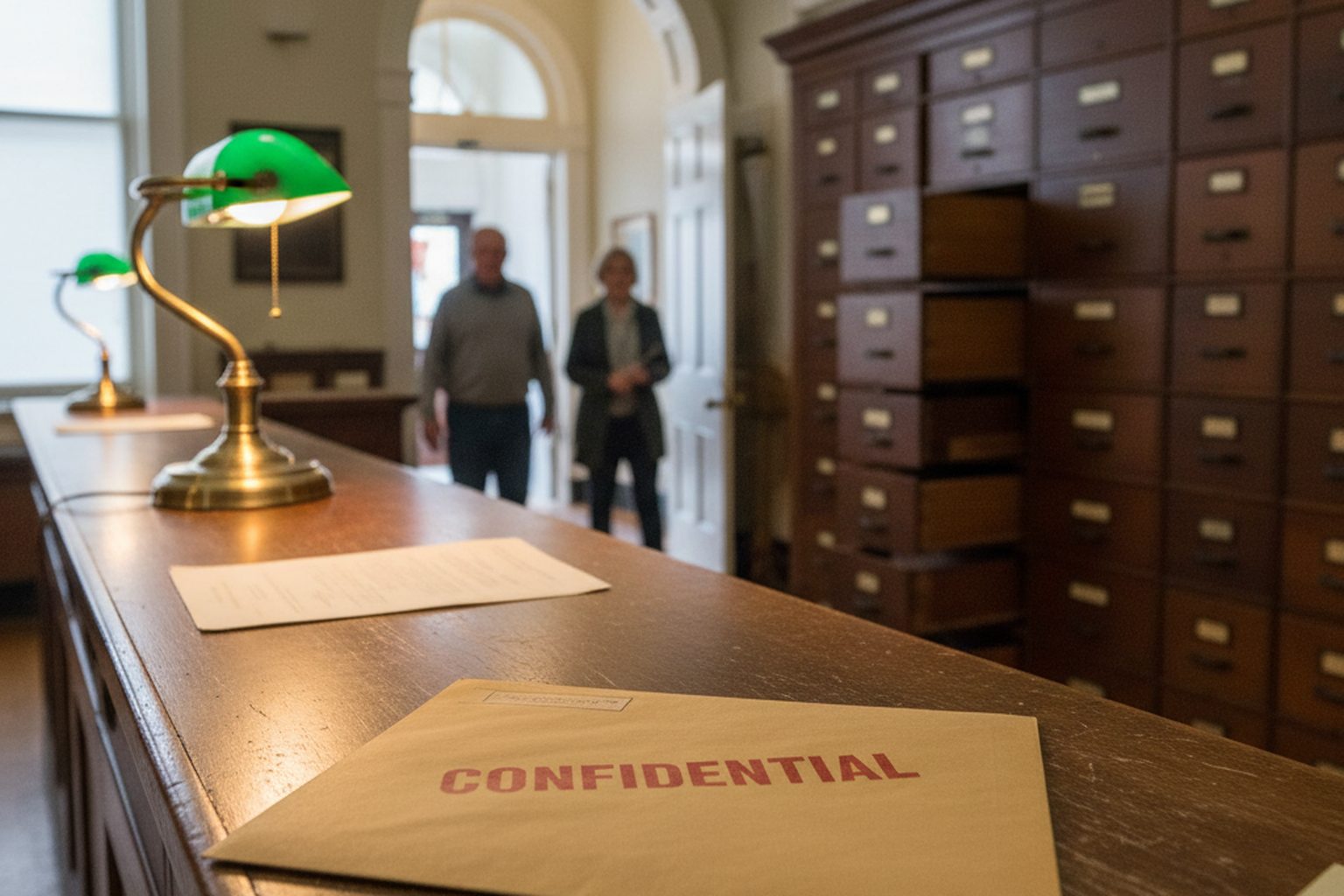
That last fact is the one that matters legally. The confidential juror questionnaire required by G.L. c. 234A, § 22 asks about “present or past involvement as a party to civil or criminal litigation” and, in the form the Office of Jury Commissioner uses, whether the juror has been arrested, charged with a crime, or served with a court order. What the juror wrote in answer to those questions is not public. Under § 23, the answers “shall be held in confidence by the court, the clerk or assistant clerk, the parties, trial counsel, and their authorized agents” unless the court orders otherwise. Reddington saw the questionnaire during jury selection and returned it to the clerk afterward, as the statute requires. He now wants it back.
The first standard: did the juror answer honestly, and would it have mattered
A juror’s failure to disclose something on voir dire does not automatically entitle a defendant to relief. The federal rule, from McDonough Power Equipment, Inc. v. Greenwood, 464 U.S. 548 (1984), requires a showing that the juror “failed to answer honestly a material question” and that “a correct response would have provided a valid basis for a challenge for cause.” Massachusetts applies a similar analysis. In Commonwealth v. Amirault, 399 Mass. 617 (1987), the Supreme Judicial Court considered a juror who had not disclosed a relevant fact and held that the question is whether the nondisclosure deprived the defendant of an impartial jury, which turns on whether the juror was honest and whether the undisclosed fact showed bias.
Apply that here. If the juror disclosed the restraining order and the dismissed charge, there is nothing to inquire into; the defense knew and seated him anyway. If he did not disclose them, the next question is whether the omission was deliberate and whether a truthful answer would have supported a challenge for cause. An active restraining order arising from a family violence allegation, in a trial about a mother who killed her children and a defense built on her mental state, is the kind of fact a lawyer would want to ask about. Whether it establishes bias is a separate question, and the answer is not obvious in either direction.
This is why the questionnaire is the whole case. It is a document that already exists, sealed in the clerk’s office, and it answers the first question definitively. Judge Sullivan can read it without anyone testifying.
The second standard: what happened in the jury room
The phone records and the request to question the juror under oath run into a different rule, and a harder one. Massachusetts does not permit inquiry into the substance of jury deliberations. The governing case is Commonwealth v. Fidler, 377 Mass. 192 (1979), which allows a court to receive juror testimony only about extraneous matters that reached the jury, not about what jurors thought, said or did in reaching or failing to reach a verdict. We walked through Fidler when the holdout’s use of an exhibit band was first reported, in our piece on why that was not misconduct.
A cellphone used during deliberations is the textbook extraneous influence. A juror who looked up postpartum psychosis, or read about the case, or communicated with anyone about it, brought something into the room that was not evidence. That is exactly what Fidler permits a court to investigate. So the phone-records request is not foreclosed by the rule; it is aimed at the one exception the rule recognizes. The problem is that the defense has to show some basis for believing it happened before a judge will order a private citizen’s phone records produced. Whether the impounded exhibits supply that basis is unknown.
Questioning the juror under oath is the most aggressive request and the least likely to be granted in the form asked. Judges do conduct post-verdict voir dire of individual jurors when a colorable claim of extraneous influence is presented, and they do it themselves, in a closed session, with counsel present and questions limited to the extraneous matter. What they do not do is let a defense lawyer cross-examine a juror about why he voted the way he did.
The impoundment order now runs both ways
Judge Sullivan sealed the jurors’ names indefinitely after finding “there have been threats made to at least one juror.” The defense supported that order. It now finds itself filing a motion about “Juror Doe” whose identity is on X, on a fundraising page approaching $400,000, and in the Boston Herald, all put there by the juror’s own lawyer, Edward Andrew Paltzik. We covered the fundraiser and the naming in Monday’s report.
The judge can, and probably will, keep the memorandum and exhibits impounded whatever he decides, because they concern a sealed criminal case and a restraining order involving a minor. The result is a hearing on September 29 at which the public will learn the outcome and little of the reasoning. Paltzik has not responded to the motion. His client is not a party and has no obligation to appear unless ordered.
The double-jeopardy motion, and why it is different from Read’s
Weinberg’s earlier motion, which we analyzed in our piece comparing it to the Karen Read motion he lost, faces a settled rule: a hung jury is a mistrial of manifest necessity, and retrial after it is permitted. Monday’s filing adds a new theory. According to NBC10, it argues that a retrial would violate double jeopardy because the claims brought to the judge during deliberations “required a judicial inquiry sufficient to ascertain whether her right to an impartial jury was being violated,” and no inquiry was made before the mistrial was declared.
The logic runs like this. Manifest necessity requires the trial judge to consider alternatives before discharging a jury; Arizona v. Washington, 434 U.S. 497 (1978), is the leading case on the care a judge must exercise. If the jury was deadlocked because one juror was disqualified, biased, or improperly influenced, the alternative to a mistrial was to inquire, and if warranted, to excuse that juror and proceed with an alternate. A mistrial declared without that inquiry, the argument goes, was not necessary, and jeopardy therefore terminated.
It is a serious argument and a difficult one. Courts give trial judges wide discretion in declaring a deadlock, and the record will show a jury that reported itself hopelessly divided three times over seven days. The defense would have to show both that a specific claim of juror misconduct or disqualification was before the judge during deliberations and that he failed to act on it. What was reported to the judge, and when, is presumably in the impounded exhibits.
There is a further problem the defense will have to confront. The remedy for a biased or disqualified juror is ordinarily a new trial, not a bar to one. A defendant who argues that the first jury was tainted is usually asking for the second trial, not resisting it. Weinberg’s theory has to turn that around, and it can only do so if the mistrial itself was improperly declared. That is why the two motions were filed together. The inquiry motion is the foundation; the double-jeopardy motion is the building.
What Reddington said he wants
“I’m hoping that Judge Sullivan allows the termination of the case,” he told reporters. “It’s just a case that needs to be done.” He said he had not spoken with District Attorney Timothy Cruz about a retrial: “Tim and I go way back. I knew him when he was a defense attorney, I know him obviously as a prosecutor, and I’m sure I’ll hear from Tim.” Cruz’s office did not respond to NBC10’s request for comment. Asked about Patrick Clancy’s “60 Minutes” interview, Reddington said: “That’s pretty much what we’ve all heard all along. I think he’s been pretty consistent.”
What to watch on September 29
Whether Judge Sullivan reads the questionnaire himself and announces what it shows. Whether he orders the phone records, which would require a finding that there is a colorable claim of extraneous influence. Whether the juror appears, and with whom. Whether Cruz announces a retrial decision at the same hearing, which would change the posture of everything. And whether the hearing is open, because a motion about a sealed record, a sealed criminal case and a minor’s restraining order may be argued in part behind closed doors.
Lindsay Clancy is presumed innocent. The juror has been convicted of nothing; the criminal case against him ended in an acquittal, and the allegations in the restraining order affidavit were never adjudicated as facts.
What is Reddington asking the court to do about the holdout juror?
Preserve records, review the juror’s confidential questionnaire, obtain his phone records for the deliberation period, and question him under oath. The supporting memorandum and exhibits are impounded.
Why does the restraining order matter?
It was active when the juror was seated in July. The juror questionnaire asks about involvement in litigation and court orders. If it was not disclosed, the question becomes whether the omission was honest and whether disclosure would have supported a challenge for cause.
Can a judge question a juror after a mistrial?
Only about extraneous influences, such as outside information or communications, under Commonwealth v. Fidler. Not about the substance of deliberations or why the juror voted as he did.
Is a retrial barred by double jeopardy after a hung jury?
Ordinarily no. The new motion argues the mistrial was not a manifest necessity because the judge should have inquired into the juror before declaring it. That is an unusual theory and faces the trial judge’s broad discretion.
When is the hearing?
September 29, 2026, in Plymouth Superior Court before Judge William Sullivan.
Motion details and Reddington’s remarks from NBC10 Boston (Ryan Kath; John Moroney and Asher Klein), September 21, 2026, and the Boston Herald (Colleen Cronin), September 21, 2026. The juror’s prior court matters as reported by the NBC10 Boston Investigators; the criminal case ended in acquittal and its records are sealed. The defense memorandum and exhibits are impounded and were not reviewed. G.L. c. 234A, §§ 22 and 23 read at malegislature.gov. Amirault, McDonough, Fidler, Arizona v. Washington and Oregon v. Kennedy verified on CourtListener. Lindsay Clancy is presumed innocent. General information about Massachusetts law, not legal advice.