

Karen Read was acquitted of murder and manslaughter on June 18, 2025. That ended the criminal case. It did not end the litigation, and in some ways it started it. There are now three civil cases running at once: the O’Keefe family’s wrongful death suit against Read and two Canton bars, Read’s own 87-page suit against the Massachusetts State Police and the Canton Police Department, and a defamation suit by trial witnesses against Read and the blogger Aidan Kearney. People searching for “Karen Read civil trial” usually mean the first one. This piece covers all three, explains why an acquittal does not stop any of them, and says what the actual next dates are.

Case one: O’Keefe v. Read, the wrongful death suit
Who sued. John O’Keefe’s brother Paul, his parents John O’Keefe II and Margaret O’Keefe, and the niece and nephew he was raising in his Canton home after both of their parents died. They are represented by Boston attorney Marc Diller.
When and where. Filed August 26, 2024 in Plymouth Superior Court, three days after Judge Beverly Cannone refused to dismiss the murder charge before Read’s second trial. The 22-page complaint was filed while the criminal case was still pending, which is unusual but permitted; Boston 25 legal analyst Peter Elikann noted at the time that families “often wait until the criminal case is completely over” but that “there’s no rule that says that.”
Who is sued. Read, and two bars: C.F. McCarthy’s on Washington Street in Canton, where the suit says Read “was served seven (7) alcoholic drinks between 8:58 pm and 10:29 p.m.” and was allowed to leave with a drink, and the Waterfall Bar & Grille a block away, where it says she had “one shot and one mixed alcoholic drink.” The bars are sued under Massachusetts dram shop law, which rests on G.L. c. 138, § 69: “No alcoholic beverage shall be sold or delivered on any premises licensed under this chapter to an intoxicated person.”
What it claims. That Read negligently caused O’Keefe’s death, and that she “outrageously created a false narrative” that inflicted “emotional injuries, severe physical pain, anguish, emotional distress and other harm” on the family. The complaint alleges that in the period before January 29, 2022 the relationship was deteriorating and Read “picked fights, experienced jealousy, and had delusions of unfaithfulness.” It seeks compensatory and punitive damages without stating a figure.

What Read has argued
In July 2025, a month after the acquittal, Read moved to dismiss. Her lawyers have argued that O’Keefe’s parents, brother and niece lack standing to recover for emotional distress because they did not witness his death or see his body until after he was pronounced dead. That is a real doctrine. Massachusetts allows a bystander to recover for emotional distress caused by witnessing injury to a close relative, but the plaintiff generally must have been at or near the scene and have experienced the injury or its immediate aftermath directly. Whether a “campaign of disinformation” after the fact can substitute for that is the novel question in the case.
Why the acquittal does not end the civil case
Because the two cases ask different questions under different standards. A criminal jury had to be convinced beyond a reasonable doubt that Read killed O’Keefe. A civil jury need only find it more likely than not. An acquittal means the prosecution failed to meet the higher standard; it is not a finding that she did not do it, and it has no preclusive effect in a civil case. The O.J. Simpson litigation is the example everyone knows: acquitted of murder in 1995, found liable for wrongful death in 1997.
The Massachusetts wrongful death statute, G.L. c. 229, § 2, makes a person who “by his negligence causes the death of a person” liable for “the fair monetary value of the decedent,” including lost income, “society, companionship, comfort, guidance, counsel, and advice,” plus funeral expenses, and allows “punitive damages in an amount of not less than five thousand dollars” where the death was caused by “malicious, willful, wanton or reckless conduct” or gross negligence. Negligence is the theory the family has pleaded against Read, with the drinking that night as its core.
There is a further wrinkle. Read was convicted of operating under the influence at the second trial. That conviction, unlike the acquittals, is a finding against her, and the family’s lawyers can be expected to use it.
Where the case stands: depositions, not a trial date
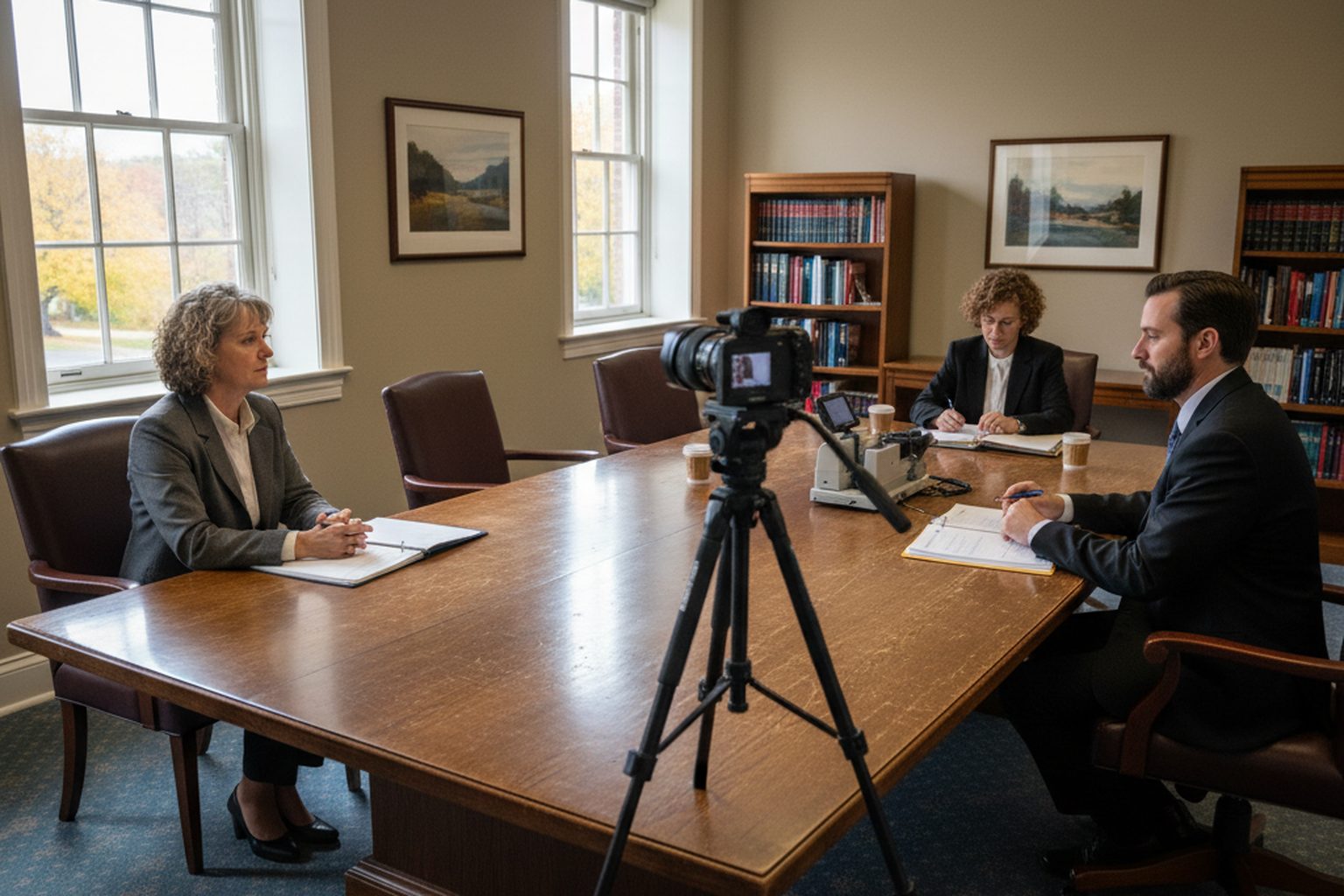
The case is in discovery before Judge Mark Gildea in Plymouth Superior Court. A virtual hearing set for January 6, 2026 was moved to February 3. On March 6, 2026, Read appeared in person for a hearing at which Diller told the court the parties had reached an agreement on access to data from her cellphones, which had been held by the Norfolk District Attorney’s office since the criminal case.
At the most recent reported hearing, attorneys said more than a dozen depositions were scheduled through the summer. Read was to be deposed first. State Police Lieutenant Sergeant Brian Tully, who oversaw the O’Keefe investigation, was scheduled for a five-hour deposition. “I guess you all just decided to ruin your own summers,” Gildea told the lawyers.
Two subpoena fights are running alongside. Diller told the court the Norfolk DA’s office had not produced documents his team requested about Aidan Kearney’s criminal cases. Read’s lawyers moved to compel the Town of Canton to produce its investigative file on Police Sergeant Sean Goode, which the town opposed as overbroad. No trial date has been set. Given the deposition schedule, a trial before 2027 is unlikely.
Case two: Read v. Massachusetts State Police and Canton
On June 4, 2026, Read’s lawyers Alan Jackson, Damon Seligson and Aaron Rosenberg filed an 87-page complaint in Bristol County Superior Court against the State Police and the Canton Police Department. It alleges negligence, civil conspiracy and misconduct, and claims investigators built “a biased and predetermined case against her” from the start.
The specific allegations include that investigators planted or manipulated taillight and glass evidence, mishandled evidence, failed to search the Albert home properly, ignored physical evidence inconsistent with their theory, allowed surveillance video to be deleted, failed to seize key witnesses’ phones, and were compromised by personal relationships. The complaint reproduces text messages from former Trooper Michael Proctor and former Canton Sergeant Sean Goode that Read’s lawyers characterize as racist, misogynistic, antisemitic and homophobic, and says both men were “unfit for positions of public trust.” “This case is about two institutions,” the lawyers said, “and a culture of bias and corruption that they built, tolerated, and hid from the public for years.”
Read seeks damages for the loss of her career, income, home and financial stability over three years of prosecution. Suits against public employers in Massachusetts run into the Tort Claims Act, G.L. c. 258, which caps most negligence damages against a public employer at $100,000 per plaintiff and requires presentment to the agency before suit. Civil conspiracy and civil rights theories are pleaded partly to get around that cap. Proctor was fired by the State Police in 2025 after disciplinary findings against him; he later invoked the Fifth Amendment in an unrelated Milton murder case, which we covered in our report on the Myles King hearing.
Case three: the witnesses’ defamation suit
Witnesses from the criminal trial have sued Read and Kearney for defamation over the accusations that they killed O’Keefe and covered it up. The defendants moved to dismiss under the anti-SLAPP statute, G.L. c. 231, § 59H, lost, and asked the court to freeze the case while they appeal. On September 18, 2026 a judge refused. We explained the ruling, and the 2024 Supreme Judicial Court decision that rewrote the anti-SLAPP framework, in our report on the stay denial. Discovery in that case proceeds.
Why the three cases feed each other
Every deposition in one case is evidence in the others. Read’s deposition in the wrongful death suit will be taken under oath by lawyers for a family that believes she killed their son, on facts she never had to address on the stand at either criminal trial, because she did not testify. Tully’s deposition will be read by Read’s lawyers in the Bristol suit. Kearney’s criminal file, if the DA produces it, will be read by everyone. The witnesses suing for defamation will have to prove the accusations against them false, which means litigating, for a third time, what happened at 34 Fairview Road.
That is the reason the civil cases are moving slowly and the reason they matter. The criminal jury answered one question. The civil cases will produce a record on all of them.
Is there a Karen Read civil trial?
Not yet. The O’Keefe family’s wrongful death suit is in discovery in Plymouth Superior Court with depositions scheduled through summer 2026. No trial date has been set.
Who is suing Karen Read?
John O’Keefe’s parents, brother, niece and nephew, for wrongful death and emotional distress. Separately, trial witnesses are suing her and Aidan Kearney for defamation.
Who is Karen Read suing?
The Massachusetts State Police and the Canton Police Department, in an 87-page complaint filed June 4, 2026 in Bristol Superior Court alleging negligence and civil conspiracy in her prosecution.
Can Karen Read be found liable after being acquitted?
Yes. A civil case uses a lower standard of proof, more likely than not, and an acquittal has no preclusive effect. Her OUI conviction, by contrast, can be used against her.
Why are the Canton bars being sued?
Under Massachusetts dram shop law, a licensed establishment that serves an intoxicated person can be liable for resulting harm. The suit alleges Read was served seven drinks at C.F. McCarthy’s and two more at the Waterfall.
Has Karen Read been deposed?
Her lawyer said at the most recent reported hearing that her deposition was scheduled for the following Tuesday. No account of the deposition itself has been published.
Wrongful death complaint details from Boston 25 News (August 26, 2024) and its report on Read’s motion to dismiss (July 2025). Hearing and deposition details from NBC Boston’s status report and from WJAR (January 6, 2026); the March 6, 2026 hearing as reported by The Boston Globe. Read’s June 4, 2026 complaint as reported by Boston 25 News and ABC News. G.L. c. 229, § 2, c. 138, § 69 and c. 258 read at malegislature.gov. Karen Read was acquitted of murder and manslaughter; the civil allegations against her, and her allegations against the police, are unproven. General information about Massachusetts law, not legal advice.